

Hollow Cone, Full Cone or Flat V: Choosing a Nozzle
Choosing the right spray nozzle is the single biggest factor in whether a spray system cleans, cools, coats or suppresses dust effectively. The three most common spray patterns, hollow cone, full cone and flat V, behave very differently. This guide explains how each one works, where it is used, and how to pick the right one for your application.
The three main spray patterns
Hollow cone spray nozzles
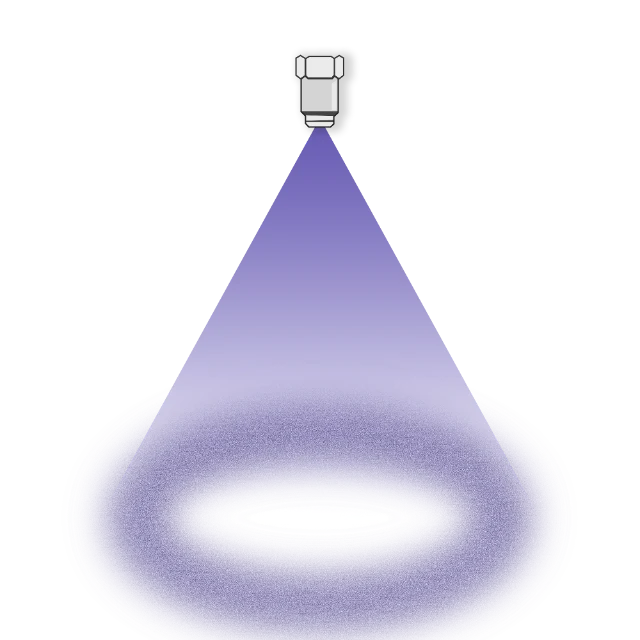
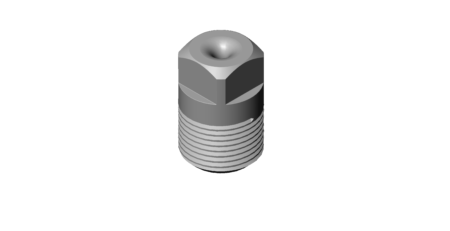
A hollow cone nozzle sprays liquid in a ring, with the droplets concentrated around the outside of the cone and an empty centre. The ring produces fine droplets and good coverage of a circular area. Hollow cone nozzles are widely used for gas cooling and scrubbing, dust suppression, humidification and fire protection, where small droplets and a large surface area matter. Because the liquid passes through a swirl chamber, the flow passage is larger than the spray angle might suggest, but fine debris in the liquid can still cause blockage, so filtration is important. See the Flui.Tech hollow cone range.
Full cone spray nozzles
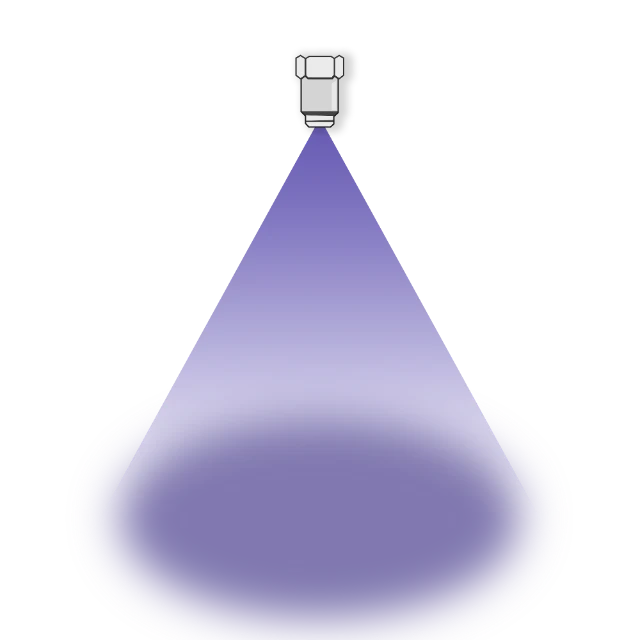
A full cone nozzle fills the whole cone with spray, giving an even distribution across a round or square area. The droplets are generally larger than those from a hollow cone nozzle at the same pressure, and the spray has strong impact on the target. Full cone nozzles suit washing, rinsing, cooling, foam control and tank cleaning, and they are a common choice for process cooling and dust control. Square-pattern versions cover rectangular areas with less overlap. Browse the Flui.Tech full cone range.
Flat V spray nozzles
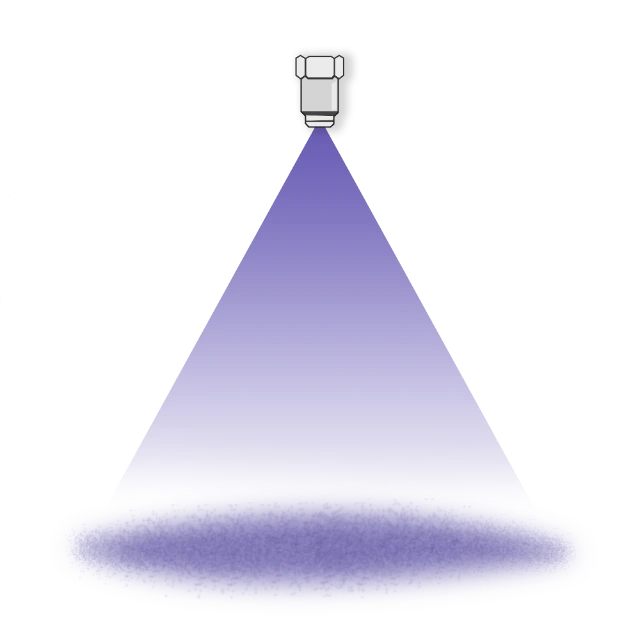
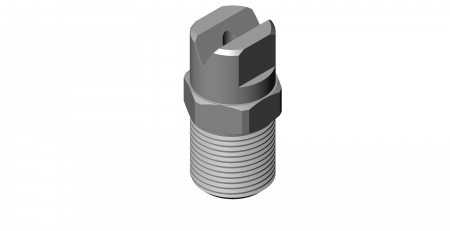
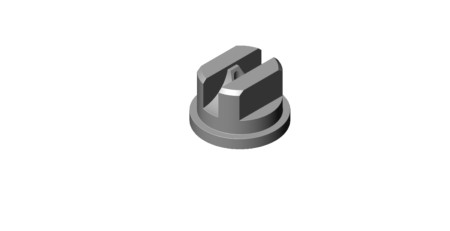
A flat V, or flat fan, nozzle produces a thin fan of liquid. The distribution is heaviest in the centre and tapers toward the edges, which is why neighbouring nozzles are mounted with their fans overlapping slightly and angled a few degrees to avoid colliding. Flat fan nozzles are the standard for conveyor washing, parts cleaning, coating and descaling, and for agricultural spraying. At higher pressures they deliver strong impact over a narrow band. See the Flui.Tech flat V range.
Choosing the right nozzle
Start with what the spray has to do, then check the operating conditions.
- Task: cooling and scrubbing usually point to hollow or full cone; washing and coating to flat V; dust suppression to hollow or full cone depending on droplet size.
- Flow rate and pressure: nozzle capacity rises with pressure, but not in a straight line. Check the capacity table for the exact nozzle and pressure you intend to run.
- Spray angle and distance: the angle and the distance to the target decide the area covered. A wider angle covers more area but with a lighter spray.
- Droplet size: finer droplets give better coverage and cooling, while larger droplets resist drift and carry more impact.
- Liquid and material: match the nozzle material to the liquid. See our guide to spray nozzle materials such as brass, stainless steel and PTFE.
- Connection: confirm the thread type and size, and whether you need a male or female connection.
Common mistakes to avoid
- Choosing on spray angle alone and ignoring flow rate at your working pressure.
- Skipping filtration, which leads to blocked or worn orifices.
- Mixing nozzle types on the same header, which produces uneven coverage.
- Ignoring wear: an enlarged orifice raises flow and changes the spray pattern, so replace nozzles on a schedule.
Get help choosing
Flui.Tech supplies hollow cone, full cone and flat V spray nozzles across Australia, New Zealand and Oceania, in a range of connections and materials. Send us your liquid, flow rate, pressure and application, and we will recommend a nozzle. See the full industrial spray nozzle range or contact us.



Leave a Reply